When Your Dentist Says They'll Keep an Eye on Your Receding Gums
Receding gums don't grow back. What people say about the years of being watched, the products that promised otherwise, and the part of the wait that is yours.
The cleaning is almost over when the hygienist pauses and calls the dentist in. They look together. Then the dentist says it, kindly enough: your gums are receding a little, here and here. We'll keep an eye on it.
And that's it. You rinse, you book the next visit, you drive home.
If you've had that appointment, you probably know what comes after. You look in the mirror more. You run your tongue along the gumline. You search late at night for something, anything, that will make the gum come back.
One person, who noticed their own recession about eight years before they finally had a graft, described the wait in one line:
"I was waiting for my dentist to refer me, but they never did anything other than keep an eye on it."
This article is about that wait, and about what it can be used for.
What "keep an eye on it" sounds like
Being watched is not the same as being ignored. It can be the sensible choice. Some recession is minor: one person wrote of recession they'd had for decades with zero symptoms.
One person on Reddit, who saw a periodontist about recession that started after a hormone change, put it calmly:
"mine's still in a stage where they're okay just monitoring to make sure it doesn't get worse but I'm glad I got it checked out for the peace of mind."
Another found a dentist who took the opposite view to their old one:
"I had been told by my old dentist that I needed a gum graft bc my gums were apparently receding. Dr Bennett said that wasn't necessary and would monitor for any recession."
So monitoring is real care. The trouble is what it feels like from the patient's side of the chair. You are told something is changing in your mouth, and then you are sent home with nothing to do about it.
Some people describe the months after as a kind of low hum of worry:
"once I started noticing changes in my teeth I became hyperaware of everything."
Others leave the appointment with more questions than answers. One person wrote that when they mentioned discomfort around three receding teeth, the reply was short:
"she said "yes you have bone loss" and left it that."
None of this makes anyone a bad dentist. It does explain why people end up on Reddit at midnight, trying to work out what the wait is for.
The sentence nobody wants to read
Here is the part that matters most, and it is not comfortable.
Healthline, in an article medically reviewed by a dentist, puts it plainly:
"As a result, receding gums don't grow back."
The same article explains why. In its words, gum tissue "doesn't regenerate the way other types of tissue does". A toothpaste maker's own education page says the same thing in different words.
People living with recession say it too, some of them after a long time of hoping otherwise.
"my gums are receding and apparently that's irreversible. So I'm trying my damndest to take better care of my mouth."
"the gum tissue can't be reversed back, which we've already lost."
"Still need to brush your teeth regularly, your receding gumline won't be coming back."
Read those three again. Every one of them goes somewhere after the bad news. The first person decides to take better care of their mouth. The last one says keep brushing. The fact that the gum won't come back isn't where their story ends. It's where it turns.
The hope that keeps people waiting
It would be strange not to hope. One person who had been through repeat grafts wrote:
"I just hope some amazing new development to regrow gums or thicken them up or a laser thing that takes care of it comes down the pike sooner than later."
That hope is understandable. It's also where money tends to disappear. Search for receding gums and you will find products that hint, or say outright, that the gumline can be brought back.
One person who bought a gum powder and used it every day reported back after about six months:
"Using this powder has not helped improve my gum line. My gums have not healed or grown back. I feel it was a waste of money."
We are not naming that product, and this is not about one brand. It's about the promise. If a dentist-reviewed source says receding gums don't grow back, then anything sold on the idea that they will is selling a hope, not a result.
That includes anything we mention later in this article. We'll come back to that.
What a graft is, and what it isn't
When recession goes far enough, the option people hear about is a gum graft. Healthline describes it simply: an oral surgeon takes gum tissue from another part of your mouth and places it around the receding area.
People who have had one describe it with more texture. One wrote:
"With a gum graft, they take some off the roof of your mouth, and graft it to the areas the gums are receding. The gum tissue on the roof of your mouth regrows, but the stuff on the side of your teeth don't."
The same person said the areas in front of three teeth cost them about $3,000.
Others are glad they did it, and honest about its limits:
"I also had a gum graft done in 2016. I don't regret it at all."
"so long as you understand it's not a fix...it's just prolonging how long you keep your teeth."
Some have had more than one. One person who had their first two grafts in their twenties said their dentist told them they might need another soon. Another said the recovery was what stayed with them:
"That was an awful procedure with a surprisingly long recovery. I never want to go through that again."
A graft can be the right call. That is a decision for you and a dentist or periodontist, not for an article. But it helps to understand it as what these people describe: a repair, sometimes a repeated one, not a reset.
Which brings us back to the wait.
So what is the wait for?
If the gum isn't coming back, and a graft is a repair you would rather not need more than once, then the months and years of being watched stop looking empty. They are the longest part of the whole story, and the only part you run yourself.
Healthline makes the same turn after its bad news: "Even though receding gums won't grow back, there are still several things you can do to prevent them from receding more." Those things begin with a dentist, not with a shopping cart.
Here is what people in these threads describe doing with that time.
They made the watching active. One person who waited years for a referral that never came did something about it:
"So I found my own periodontist and took care of everything myself."
If your recession seems to be changing, it is reasonable to ask whether a periodontist should take a look, and to ask what exactly is being measured at each visit.
They got a second opinion when something felt off. One person was told at eighteen they'd soon need a graft, then saw a different hygienist months later:
"she took a look at them for a while and literally said that they looked fine and to continue brushing gently. a second opinion is so important"
They asked what was causing theirs. The causes people were told about are all over the place: brushing too hard, grinding or clenching at night, nicotine pouches held in one spot, braces, hormone changes, and plain genetics. One person was told some people simply have thin gum tissue. You can't work out your own cause from a forum, which is exactly why it's worth asking at the next visit.
They changed how they brush. For some people this made a real difference. One wrote:
"my gum recession has pretty much halted since I switched to an electric toothbrush with a small round head (instead of the larger more traditional types)."
Another was told to hold the brush differently:
"so now I hold it with 2 fingers, I look like I have a tiny tooth brush."
We include these because they are honest. Not everyone's story is about a graft. For some, gentler technique was enough to stop things getting worse. Your dentist can tell you whether yours is one of those.
They built a routine they could keep. The person who called their recession irreversible didn't stop there. They said they were trying their hardest to take better care of their mouth, every day.
That is the shift this whole article is about. Stop waiting for the gum to come back. Start treating the time between check-ups as yours.
Something small of your own
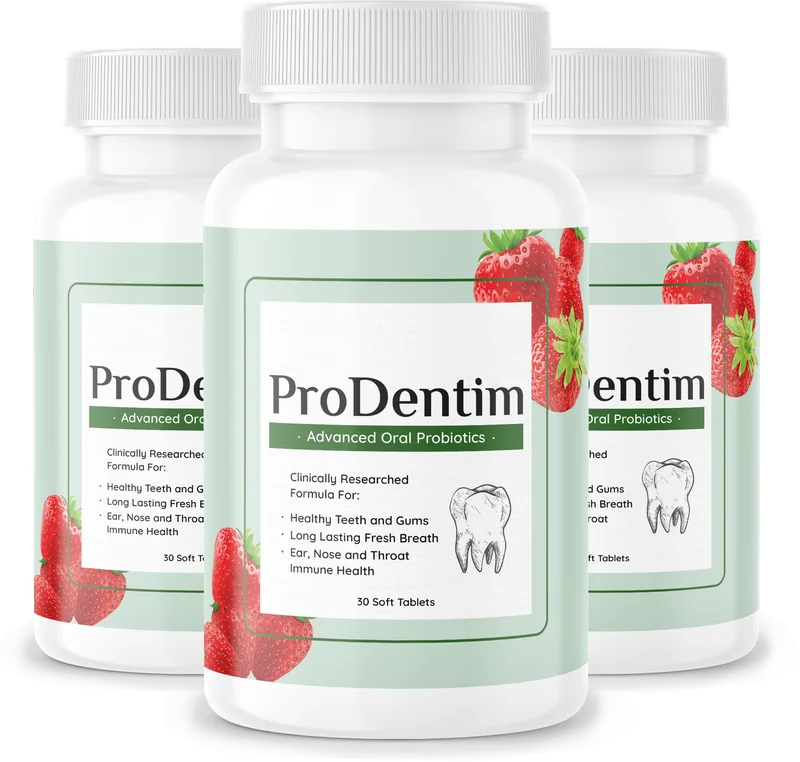
Once you stop waiting for the gums to come back, the question becomes what you can do with the days in between. The dentist's plan comes first. If you want one small thing of your own next to it, ProDentim is one chewable probiotic each morning, bought once, with 60 days to send back what you haven't used. It does not grow gums back, and we would not trust anything that said it did.
According to its label, each tablet contains three named probiotic strains:
- Lactobacillus paracasei
- B. lactis BL-04
- Lactobacillus reuteri
along with inulin, malic acid, tricalcium phosphate and peppermint.
You take it by chewing one tablet slowly each morning. It's a different kind of step from brushing: instead of removing anything, a probiotic adds bacterial strains to your mouth. It doesn't ask you to scrub harder, buy another gadget or change your technique.
A few things worth knowing before you look at it:
It is not a replacement for anything. Keep brushing gently. Keep flossing. Keep your check-ups, and ask about a periodontist if your recession is changing. If you need a graft, this is not instead of one.
It makes no promise about your gums, and neither do we. The maker's own sales page makes its own claims. We don't repeat them and we don't vouch for them.
It is a one-time purchase, not a subscription. We found no subscription, autoship or repeat billing on the sales page.
There is a refund window. ProDentim comes with a 60-day money-back guarantee. In the maker's words, you "can just return what you haven't used for a full, no question asked refund."
If you take medication or have a medical condition, the maker advises showing a bottle to your doctor before you start, and so do we.
Common questions
Will this grow my gums back? No. Nothing we know of does, and a dentist-reviewed source says receding gums don't grow back. Be wary of any product that suggests otherwise, including in its own marketing.
Can I use it instead of a graft? No. Whether you need a graft is a question for your dentist or a periodontist. A daily chewable is something you can add to your routine, not a way around a procedure.
Then why bother? Because the wait is long, and it's yours. What people in these threads describe doing with it is dental care: check-ups, second opinions, gentler brushing. A probiotic is a small daily addition of a different kind, and the 60-day refund on what you haven't used is there so you can decide for yourself whether it earns a place.
How long does a pack last? At one tablet a day, the six-bottle pack is listed as a 180-day supply, and the page lists free US shipping on the larger packs. It is the option that fits a daily habit best, and the one we would look at first.
The bottom line
If your dentist has said they'll keep an eye on your receding gums, you already have the hardest piece of news, whether anyone said it out loud or not: the gum that has gone is not coming back. That is not the end of the story. It is the moment the waiting can become something else.
Keep the check-ups. Ask what's being measured, and ask about a periodontist if things are changing. Be gentle with your brush. Get a second opinion if a plan doesn't sit right. And if you want one small thing of your own each morning, there is a simple option, with no promise attached.
In short:
- One chewable tablet each morning, next to brushing and your check-ups
- No claim to grow, protect or save anything
- A one-time purchase, not a subscription
- A 60-day money-back guarantee on what you haven't used
- The six-bottle pack as a 180-day supply, with free US shipping listed on the larger packs
Quotes in this article are taken from public posts on Reddit and are reproduced as written. None of the people quoted here said they used ProDentim, and they did not review or endorse it. The Healthline article quoted is "Do Receding Gums Grow Back? What About Oil Pulling, Other Methods?", medically reviewed by Jennifer Archibald, DDS.
These statements have not been evaluated by the Food and Drug Administration. This product is not intended to diagnose, treat, cure or prevent any disease. If you are pregnant, nursing, taking medication, or have a medical condition, consult your physician before using it. This article is not medical advice. If your gums are receding or changing, see your dentist.