Brush and Floss Every Day and Still Bleed? Many Careful Brushers Do
What people who keep up a full routine say about bleeding gums, what usually helps, and the one part of oral care that cleaning doesn't cover

You know the moment. You're in the chair, the light is in your eyes, and the hygienist starts with the probe. You brushed this morning. You flossed last night, and the night before that. And then you taste it, or you see pink when you rinse.
Then comes the question. Are you flossing?
You are. That's the frustrating part.
If this sounds familiar, you are not imagining it, and you are not the only one. Read through enough forum threads about bleeding gums and the same story keeps coming up, told by people who sound tired of telling it. They brush twice a day. They floss. Some own a water flosser and a toothpaste made for sensitive gums. And they still bleed.
This article is for them. It won't tell you your routine is useless, because it isn't. It will walk through what these people describe, what has actually helped some of them, and the one part of oral care that cleaning was never built to do.
"I don't know what I'm doing wrong"
Here is how one person put it, in a question posted to a dental forum on Reddit:
"I brush and floss religiously and my gums still bleed when I floss. Especially any place I've had previous work/fillings. I don't know what I'm doing wrong. Even my hygienist just told me she can tell I take good care of my teeth."
Read that last line again. The hygienist could see the care. The gums bled anyway.
Another wrote about months of effort that did not seem to move anything:
"Six months of flossing twice a day, yep gums still bleed."
And a third, on a different thread:
"I actually do brush 2x a day and floss once a day....... My gums still bleed at the dentist.. Hell my gums bleed every time I floss."
It isn't only Reddit. On Ask MetaFilter, a question-and-answer site, someone asked in 2025 whether other people's gums bleed at the dentist. Several of the answers came from people with careful routines, though many others said flossing more often had helped them:
"my gums bleed despite brushing 2x daily and flossing 1x daily. My dentist just shrugs and goes on with the cleaning."
Another person in the same thread described brushing three to four times a day and flossing two to three times a day, with a special gum toothpaste and cleanings twice a year:
"My gums don't bleed or hurt when I floss at home, but they sure do at the cleaning."
None of these people sound careless. They sound like people who have done what they were told, and then some.
The part that stings: not being believed
For many of them, the bleeding is only half of it. The other half is the conversation that follows.
One person asked, in a thread about exactly this:
"I'm wondering why, even when I floss after every meal and brush twice a day, the dentist says I'm not because my gums are bleeding when she's poking them with that god forsaken probe."
Another remembered it from childhood:
"It was so frustrating as a kid to have the dentist always telling me I don't brush and floss when I knew I did and then my parents would yell at me."
That feeling, of being quietly accused, is worth naming, because it shapes what happens next. When the only advice you hear is to do more of what you are already doing, it can feel less like a plan and more like a verdict.
So people do more. They buy more.
The cabinet full of cleaning tools
Ask someone in this situation what they have tried, and the list tends to be long. One person, clearly at the end of their patience, wrote:
"Use a water pick! Have been through 3, use regular floss in the morning and the water pick at night, still gush out blood."
The same person had already tried toothpaste for sensitive teeth and gums, and every kind of brush they could find: manual, electric, and one shaped like a mouth guard.
Someone else described a gentle, by-the-book setup:
"I use a soft bristled electric toothbrush on soft setting and am gentle but still, blood blood blood."
And one person turned it into a year-long experiment:
"I brushed, flossed and used scope, for an entire year as a challenge, my gums still bled at the dentist."
Notice what every item on these lists has in common. A brush, floss, a water flosser, a rinse, a toothpaste. Each one is a way of cleaning: of taking something away from the teeth and gums.
Hold on to that. It matters in a minute. First, the part of the story that deserves to be told straight.
What has genuinely helped some people
It would be easy to write an article that tells you your routine doesn't matter. It would also be wrong.
In the same threads, many people describe bleeding that eased once their cleaning changed. One wrote:
"After I formed the habit and brushed and flossed every day for a little while the bleeding stopped. It also helped that I had a dental hygienist show me how to properly floss. Technique is apparently really important so if someone is flossing but still bleeding it's possible their technique needs looked at."
Another, who had been told at every visit to floss more, finally flossed in front of the dentist and learned something:
"Im 23 and just found out i never learned how to floss "properly" had no clue you had to dig up in the gums."
Even people with excellent routines sometimes find gaps. One MetaFilter commenter who flosses twice a day and gets compliments on their home care still bleeds in two spots, and said why:
"I just don't reach them as well when I'm flossing even as regularly as I do."
And someone who said they work as a lab tech at a dental office offered this explanation on Reddit:
"A lot of times stubborn gum bleeding with normal brushing comes from tartar/calculus buildup under your gums."
So here is the plain advice:
- Ask your hygienist to watch you floss and brush. It can feel awkward. It is also one of the most useful things anyone in these threads reported doing.
- Ask about buildup under the gumline. The same person said hygienists scrape that buildup off during a cleaning.
- See your dentist about bleeding that continues. Bleeding gums can signal something only a dentist can assess, and that is worth ruling out.
Keep all of it. None of this is a reason to brush or floss less.
But some people do every one of those things, get their technique checked, and still find themselves in that chair, seeing pink when they rinse. If that is you, it may help to look at the problem from a different side.
Cleaning only does one kind of job
Go back to that cabinet. Brush, floss, water flosser, mouthwash, special toothpaste. Every one of them works by removing: food, plaque, buildup.
That job is essential. Nobody is suggesting you do less of it.
But it is only one kind of job. Everything in that cabinet takes something away. Nothing in it adds anything.
Here is one way to look at it. Your routine is the part of oral care that removes. A probiotic is a different kind of step: it adds bacterial strains to the mouth. The two don't compete. One doesn't replace the other. They are simply different jobs.
That idea doesn't mean your routine has been failing you, and it isn't a promise about your gums. It is a way of seeing why buying one more cleaning product can feel like going in circles. If you have already done the removing part as well as you can, the adding part is the side of the picture you may never have been offered.

Where ProDentim fits
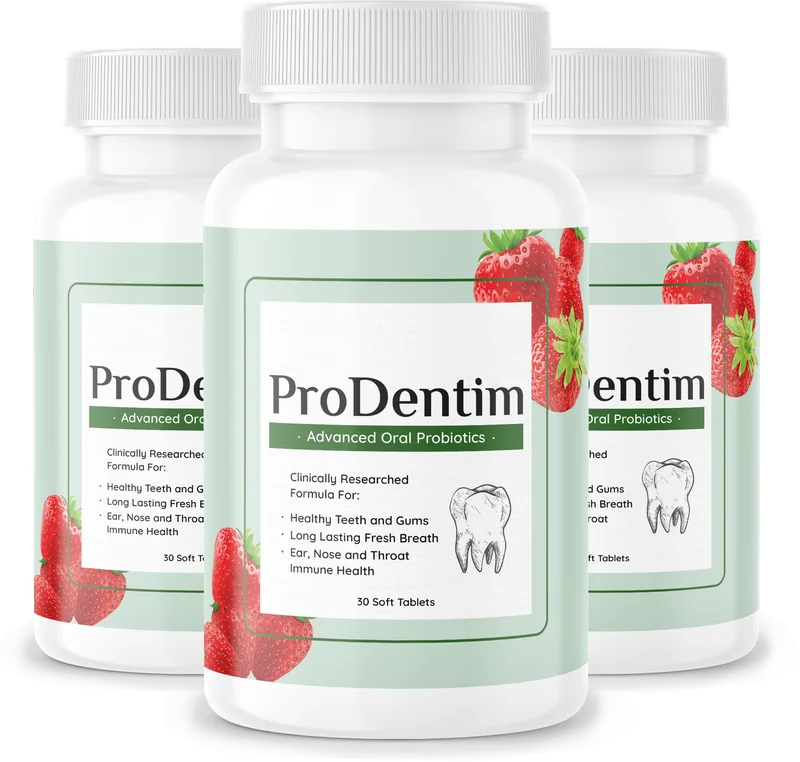
ProDentim is a chewable probiotic tablet made for the mouth. According to its label, each tablet contains three named probiotic strains:
- Lactobacillus paracasei
- B. lactis BL-04
- Lactobacillus reuteri
along with inulin, malic acid, tricalcium phosphate and peppermint.
You take it by chewing one tablet slowly each morning. That's the whole routine change. It doesn't ask you to brush longer, floss differently or buy another gadget. It sits next to the habits you already have.
A few things worth knowing before you look at it:
It is not a replacement for anything. Keep brushing. Keep flossing. Keep seeing your dentist, and get your technique checked if nobody has done that yet.
It is a one-time purchase, not a subscription. We found no subscription, autoship or repeat billing on the sales page. You buy a pack, and that's it.
There is a refund window. ProDentim comes with a 60-day money-back guarantee. In the maker's words, if you aren't fully satisfied you "can just return what you haven't used for a full, no question asked refund."
If you take medication or have a medical condition, the maker advises showing a bottle to your doctor before you start, and so do we.
Common questions
Should I stop flossing if it makes my gums bleed? No. Several people in these threads found that bleeding eased once flossing became consistent and their technique improved. If it keeps bleeding, that is a question for your dentist, not a reason to stop.
Will a probiotic stop my gums from bleeding? Nobody can honestly promise that, and we won't. What a probiotic does is a different job from cleaning: it adds bacterial strains instead of removing anything. ProDentim is a simple way to add that job to your morning, and the 60-day refund on what you haven't used is there so you can judge it for yourself.
I've already tried everything. Why would this be different? Look at the list again. Most of what people in this situation have tried is another way of cleaning. A probiotic isn't. That doesn't guarantee a different result, which is exactly why the refund window matters.
How long does a pack last? At one tablet a day, the six-bottle pack is listed as a 180-day supply, and the page lists free US shipping on it. That is the option that matches a daily habit best, and the one we'd look at first.
The bottom line
If your routine is already solid and the bleeding still shows up at every cleaning, the next step does not have to be another brush or another floss. Keep all of that, have a dentist check your technique, and if you want to add the part cleaning doesn't do, ProDentim is one chewable probiotic each morning, bought once, with 60 days to send back what you haven't used.
In short:
- One chewable tablet each morning, next to brushing and flossing
- A one-time purchase, not a subscription
- A 60-day money-back guarantee on what you haven't used
- The six-bottle pack as a 180-day supply, with free US shipping listed on the larger packs
Quotes in this article are taken from public posts on Reddit and Ask MetaFilter and are reproduced as written. None of the people quoted here said they used ProDentim, and they did not review or endorse it.
These statements have not been evaluated by the Food and Drug Administration. This product is not intended to diagnose, treat, cure or prevent any disease. If you are pregnant, nursing, taking medication, or have a medical condition, consult your physician before using it. This article is not medical advice. If your gums bleed regularly, see your dentist.